The Myth: Investors are driving the housing crisis
This is the dominant conversation right now, but it oversimplifies a complex, structural issue.
Housing affordability has become more challenging, particularly following sustained interest rate rises across Australia. Borrowing capacity has tightened, holding costs have increased, and feasibility has become more difficult for both buyers and developers. But these pressures sit within broader constraints that have been building for years.
Supply remains the core issue. Planning delays, approval uncertainty, construction costs, labour shortages and infrastructure timing all limit how much housing can be delivered, and how quickly. These are systemic challenges, not investor-driven ones.
Investors didn’t create these conditions. Historically, they’ve helped enable new housing, particularly in the medium-density space where much of Melbourne’s future supply sits. Investing isn’t inherently unethical, it becomes problematic when the system fails to produce enough housing overall.
What’s changing? Policy is rewriting the market
What is changing is the role of policy in shaping where housing goes.
Across Victoria, Activity Centres are being expanded to direct growth into well-serviced parts of the city. Locations with access to transport, jobs and services while easing pressure on continued sprawl. This shift is already influencing the market.
For investors, the key takeaway is that opportunity is no longer evenly spread. It’s increasingly tied to where policy is providing direction and support.
Why Activity Centres will outperform
Activity Centres bring together a combination of factors that are hard to ignore.
Planning pathways, while not perfect, are generally clearer than in ad-hoc suburban locations. When sites align with policy, the process tends to be more predictable, often leading to faster approvals and reduced holding risk, particularly important in a higher interest rate environment.
There is also strong end-user demand. These areas attract downsizers, first home buyers and renters who want to stay connected to established parts of Melbourne. This reflects how people want to live, rather than short-term speculation.
Importantly, the infrastructure is already in place. Transport, retail, schools and open space are existing conditions, not future promises. Zoning matters, but it’s what surrounds a site that determines how well it performs and Activity Centres tend to have that advantage.
The overlooked opportunity: where families can actually buy
Higher density living doesn’t suit everyone. Many families are still looking for space, a backyard and a bit of separation. Increasingly, they’re finding this just outside Activity Centres, rather than moving further out. In many cases, schools and everyday amenities remain within walking distance or an easy bike ride, with public transport close by.
This creates a more layered market. Within the centres, higher-density housing tends to attract investors and first home buyers. Around the edges, families continue to upgrade into larger homes. These segments sit alongside each other, rather than directly competing.
At the same time, there is a growing opportunity within Activity Centres themselves.
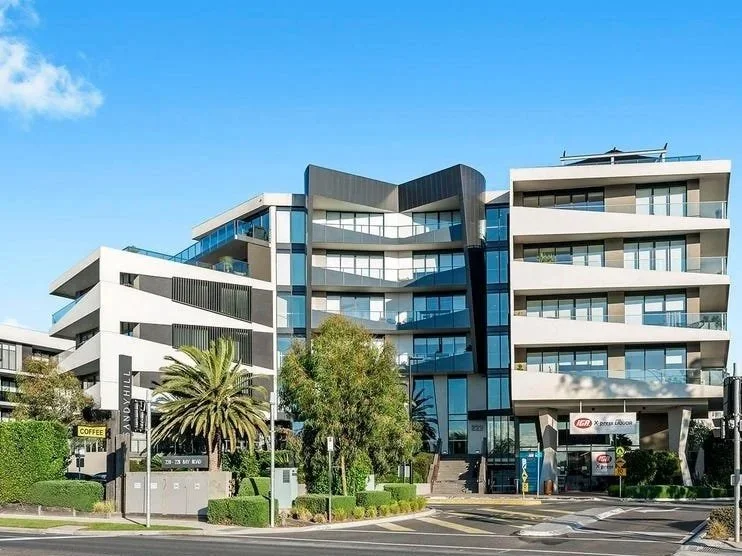
Sandy Hill Precinct, Sandringham
This relatively new development offers shared amenities including a pool, gym, sauna, function room, and on-site retail. Three-bedroom apartments present a practical option for families who want connectivity and convenience, without the ongoing maintenance of a standalone home.
Well-designed, family-oriented apartments (such as three-bedroom, ground-floor dwellings with access to shared open space, parks and nearby amenities) can offer a different but equally viable way of living. In the right setting, with access to communal facilities like green spaces, cafés and local services, this type of housing can appeal to a broader range of households than is often assumed. It’s an area where thoughtful design and planning can make a meaningful difference, and one that SELA will look to explore further through future projects.
For investors and developers, this opens up a broader mix of housing product within the same precinct, with demand coming from different parts of the market.
Myth-Busting: First Home Buyers vs Investors
The idea that investors and first home buyers are in direct competition is often overstated.
In many cases, investors help deliver smaller, more affordable dwellings for first home buyers to purchase. At the same time, families tend to operate in a different part of the market, targeting larger homes nearby.
Tension tends to arise when supply is constrained or when there is limited product diversity. When both are addressed, the system functions more effectively.
Has property investing become unethical?
The answer depends on how it’s done. Investment that relies purely on capital growth in constrained markets can add pressure.
However, investment that supports new housing, delivers well-designed environments and aligns with long-term planning direction plays a constructive role. In that sense, investment isn’t the issue, it’s how it interacts with the bigger picture.
Where SELA sits in this conversation
At SELA, our work sits across built form, public realm and planning frameworks, particularly within Activity Centres.
Working with developers, investors and consultant teams, the focus is on ensuring increased density translates into liveable environments, where landscape is treated as essential infrastructure and developments respond to their context.
Better environments tend to support stronger housing outcomes, and in turn a more stable market.
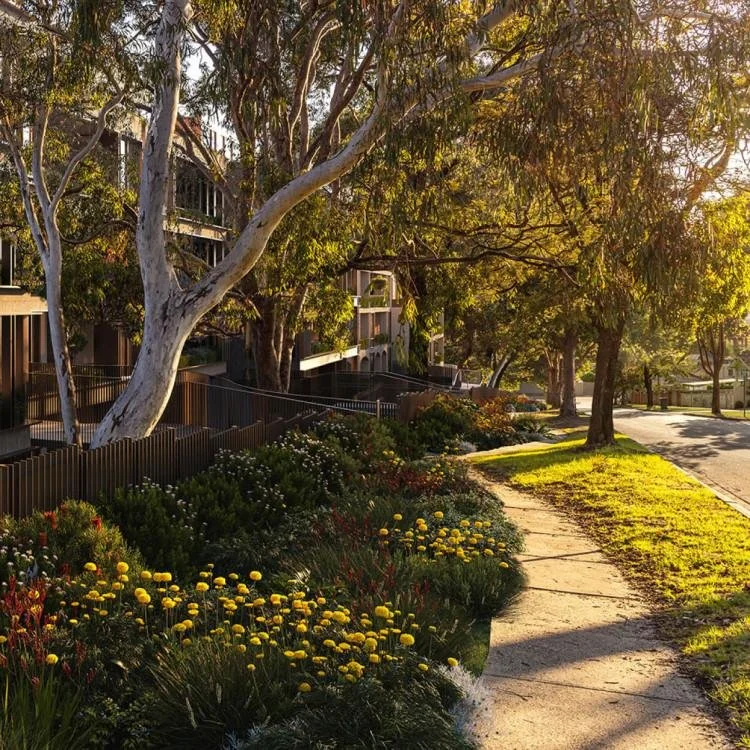
It can be done.
A typical example of medium-density living, where access to trees, space and amenity is built into the street.
Closing thought
The housing conversation doesn’t necessarily need to be louder, it needs to be clearer.
Within the development and construction industry, there is generally a shared understanding of the challenges shaping housing delivery. But that understanding doesn’t always translate clearly to the broader community.
What feels increasingly important is better alignment between policy, investment and design. In Victoria, that alignment is beginning to take shape through the rollout of Activity Centres, where growth is being more deliberately directed and supported.
From a landscape perspective, this is where the quality of the environment becomes critical. As density increases, the role of landscape in shaping liveable, well-functioning places becomes more important.
The focus is less on whether to participate, and more on where and how to do it well. Time and energy spent resisting change, particularly without a clear understanding of how these areas are evolving, can limit the opportunity to shape better outcomes.